Session 1. Who's in charge? The King, the Prime Minister and Parliament
Key question: Who has the real power in the United Kingdom: the King, the Prime Minister or Parliament?
This first recap checks what you already know. It is marked, but every answer counts as a starting point.
1. Who is the King of the United Kingdom today?
2. In which city does the UK Parliament sit?
3. Name one thing you associate with British politics.
Show the recap answers
- Charles III, King since 8 September 2022.
- In London, at the Palace of Westminster, on the River Thames.
- Any accurate answer: Brexit, the Prime Minister, 10 Downing Street, the House of Commons, elections, the King's Speech.
Key words first
- Head of State: the person who represents the country (in the UK, the King)
- constitutional monarchy: a system where the monarch's powers are limited by rules and by Parliament
- impartial: not taking sides
- Parliament: the place where laws are made: the House of Commons, the House of Lords and the King
- MP (Member of Parliament): a person elected to sit in the House of Commons
- to appoint: to choose someone officially for a job
Aims
- Name the three main actors of British politics and say what each one does
- Describe a painting of Westminster and link it to power
- Use can / cannot and has to to talk about powers
To explain who can do what in British politics, we need modals of power (can, cannot, has to, must) and the present simple for facts.
Documents
Document A. The King and the Prime Minister
The King is the Head of State.
He does not take sides in politics.
Parliament makes the laws. Parliament is elected.
Every week, the King meets the Prime Minister in private.
He can give advice and warnings. He cannot give orders.
Read the original text
“The UK has a constitutional monarchy, meaning that whilst The King is the Head of State, he remains politically impartial. The ability to make and pass legislation resides with an elected Parliament.”
“As Sovereign, The King holds a weekly Audience with the Prime Minister to discuss Government matters. The Monarch remains politically neutral on all matters, but he is able to ‘advise and warn’ his ministers, including his Prime Minister, when necessary. These Audiences are entirely private.”
Source: The Royal Family, The Sovereign and the Prime Minister
Document B. A week in the House of Commons
On Wednesday, at 12 midday, the Prime Minister answers questions from MPs.
This is called Prime Minister's Questions.
Read the original text
“The House will sit from 11.30am, starting with Wales questions. Prime Minister’s Questions will take place at 12 midday.” (Wednesday 4 November 2026)
Every Wednesday, the Prime Minister stands in the House of Commons for about half an hour and answers questions from MPs, starting with the Leader of the Opposition.
Source: UK Parliament, Coming up in the Commons, 2 to 4 November 2026
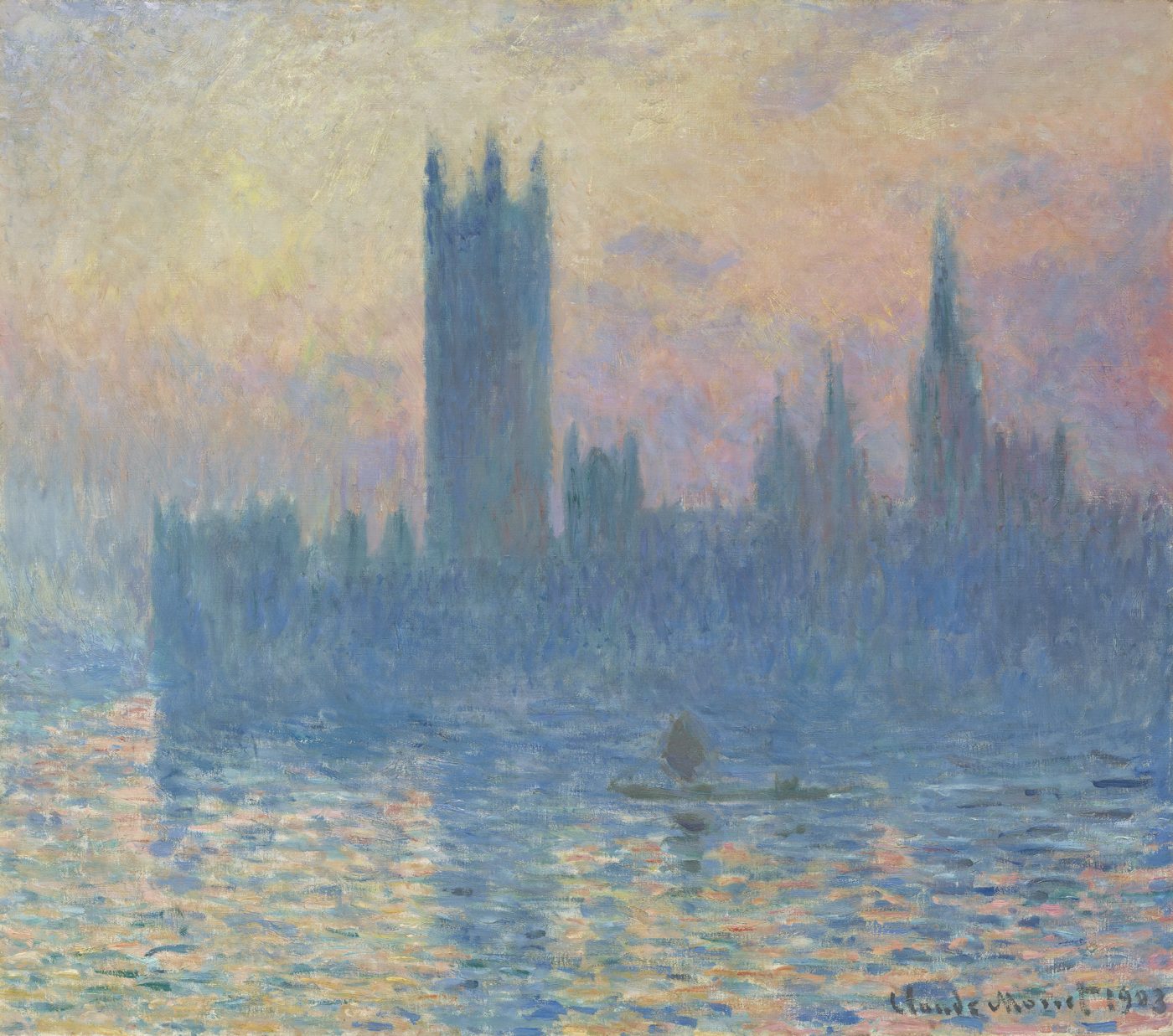
Look: The painting is a small landmark, not the lesson: in two sentences, say which building you see and why a painter might choose it as a symbol of Britain.
Words in action
EntryComplete with a word from the key words: Head of State, impartial, Parliament, MP, to appoint.
- The King is the ______ of the United Kingdom.
- An ______ is elected to sit in the House of Commons.
- The King stays ______: he does not take sides.
- ______ makes the laws.
Show the answers
1. Head of State. 2. MP. 3. impartial. 4. Parliament.
To say it: Modals of power
can = it is possible. cannot = it is not possible.
has to = it is an obligation.
He can. He cannot. He has to.
EntryChoose the right modal.
- The King (can / cannot) give orders to the Prime Minister.
- The Prime Minister (has to / cannot) answer questions on Wednesdays.
- MPs (can / cannot) vote on new laws.
Show the answers
1. cannot. 2. has to. 3. can.
Activities
- Pair work: read Document A and underline what the King can do, then circle what he cannot do.
- Read Document B: who answers the questions, who asks them, and how often?
- Fill the class grid: King / Prime Minister / Parliament, with one power for each. Language: To fill the grid, use the tools below: The King can ..., the Prime Minister has to ..., MPs can ...
- Summary sentence, said aloud by three students: In the UK, the King reigns, but ...
Sentence starters
- The King can ...
- The King cannot ...
- The Prime Minister has to ...
- MPs are elected by ...
Exercise: Who does what?
Match each action with the King, the Prime Minister or MPs.
- answers questions every Wednesday at noon
- meets the Prime Minister every week in private
- are elected by the people
- advises and warns, but stays neutral
- vote on new laws
- leads the Government
Show answers
1. The Prime Minister. 2. The King. 3. MPs. 4. The King. 5. MPs (in Parliament). 6. The Prime Minister.
Figures of speech in the documents
“The House will sit from 11.30am” (Document B)
The House = the MPs inside the building.
EntryWho sits in “The House will sit”?
Show the answers
The MPs, the members of the House of Commons.
Expression task
Oral. A younger student asks you: “Who's in charge in Britain?” Answer in 45 seconds.
EntrySay three sentences, one for each actor, with one modal in each.
Tools to use:
- can / cannot / has to
- Head of State, Parliament, MP, impartial
- one metonymy
Sentence starters:
- The King can ...
- The King cannot ...
- The Prime Minister has to ...
- MPs can ...
Show a model answer
The King is the Head of State, but he cannot give orders: he can only advise and warn in private. The Prime Minister leads the Government and has to answer MPs' questions every Wednesday. MPs are elected and they can vote on new laws. So Westminster makes the laws and Downing Street governs, whereas the King represents the country.
Going further (optional)
Find the two adjectives royal.uk uses for the King (impartial, neutral). Explain in five lines why neutrality might be the price a monarchy pays to survive in a democracy.
Lesson plan for the teacher (55 minutes)
| 5 min | Marked recap |
| 10 min | Painting as a landmark, then Document A in pairs |
| 10 min | Document B and the class grid |
| 15 min | Exercise: who does what? |
| 10 min | Oral summary, C1 extension for fast finishers |
| 5 min | Homework in planners |
Learn the six key words. Then write three sentences beginning with: I think the real power belongs to ... because ...
Help: use the key words and the sentence starters above. Write one idea per line.
Write it in your planner before the bell. It is also posted on the school platform.
Show a model answer
Model answer: I think the real power belongs to the Prime Minister because he leads the Government. I think Parliament also has power because it makes the laws and MPs are elected. The King is important as a symbol, but he does not take political decisions.